
Sonia Leticia Martínez García
Intercontinental Coordinator
"Get up and walk" is part of my daily life.
Our Capabilities Overcome Our Limitations.
Life will put you in obstacles; but you set the limits.
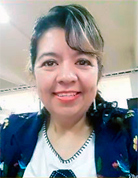 I am Sonia Leticia Martinez Garcia, I was born on July 7, 1977, in Guatemala City, I acquired a physical disability 25 years ago, as a result of an accident I became paraplegic, from there I changed the direction of my life to 360 degrees, My dreams and projects. I consider myself an affable, enterprising, social communicative woman, very grateful to life, and a warrior woman.
I found a different life, I was born again and I understood that I had a second chance to live, I realized that it was part of the world of disability that nobody sees ...; and from that day everything was going to be different in what I wanted to achieve, my effort was to double in all my activities to be done. But that did not stop me in my life expectations, I was filled with many strengths to resume my life with a positive attitude always, it does not mean that I did not decay, there have been many moments, from which I have learned to not always remain that way. I have learned to fall and get up every day.
Our Good Father gave me a second chance and I consider myself privileged to open my eyes every morning when many have closed them forever, life is very ephemeral that is why I have learned to enjoy to live, to forgive, to love, to understand, to tolerate, etc ... Always with the support of my family and friends. I consider myself a charismatic person and that I am part of God's perfect plan for each one.
- I participate in the Christian Fraternity of Sick and Disabled Persons of Guatemala, for 15 years, I summarize it in these three questions:
- How did I get to Frater? by an invitation from a friend to meet and participate in a nucleus in the city.
- What has Frater done in me? You have shaped my life and enjoy each day with passion.
- What did I find in Frater? I found myself, I have found a new way of life, to accept myself, friends and family.
- What do I expect from Frater? May he continue to sow and bring the light of the living gospel to many hearts that feel sad and alone.
- I have had the following positions:
- National Coordinator from 2014 to 2018
- Sub-coordinator of 2010 - 2014
- I resumed my higher studies at the University of San Carlos de Guatemala in the career of Chemist and Pharmacy, but I saw the inaccessibility that I had in transfers to raise and lower buildings, relocating to the School of Psychology.
- I started my work life in the year 1998 - 2011 General San Juan de Dios Hospital, in an NGO Reproductive Health Research Center –CIESAR-.
- Currently working for six years in the Ministry of Social Development, in the Subdirectorate of Productive Training.
- I have participated in several Congresses and Seminars at national and international level with topics such as; for the Rights of Persons with Disabilities and Training of various social issues.
- I have participated in Continental Assemblies of Fraternity and Area I Meetings, exchange meetings between fraternities in Central America, in favor of formation and growth as a human being.
- I have training in workshops and graduates in Psychology from the CREARE Organization.
María Del Carmen Mazariegos Ola
Intercontinental Vice-Coordinator
TIME TO BEGIN
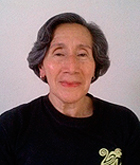 María del Carmen Mazariegos Ola, Guatemalteca, 15-3-53. Occupation: Florist.
As I have shared in other opportunities:
1976. Leaving for a walk, the friend who was driving did not see a bend and we fell into a ravine. Since then I move in a wheelchair. It was a hard time. And like the Parable of the Lost Currency, finding Frater, everything made sense. My life was not ending ... with my family it was TIME TO BEGIN.
1979. Sister Rosita Hasbún invited me to a fraternity meeting, I liked the joyful atmosphere so much ... I thought, here I want to stay.
1980 Secretariat support in an Area Encounter
1983 Member of a nucleus. National team secretary
1987 National Coordinator
1993 2001 Area I Coordinator (Mexico, Central America and the Caribbean), Extension visits, animation, training.
2014 2018 Intercontinental Coordinator attached.
I'm gratefull. It has been a strong time, with so much wealth, faces, inns where I was welcomed with so much love, friends, hugs, goodbyes. I continue to be part of a core and core team.
As I have often said; "La Frater is a very happy way of life."
Miguel Ángel Arrasate
Intercontinental Advisor
"What do you want me to do for you? Get up, take your stretcher-story and walk to the community."
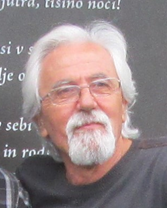
Michelangelo Arrasate. O.P
Dominican order
Date of birth: 15-3-51.
Spanish nationality.
Resides: Panama- Republic of Panama
Christian fraternity of people with disabilities (FRATER)
Dear fraternity, family ...
Cordial greetings and my apologies for delaying the response, as the letter sent requested a limit response on May 15.
First of all, thank you for the confidence you express in proposing my person for this specific responsibility within the fraternity.
As you know, I am, as part of the team, concluding the period that the committee of Slovenia was entrusted to us to perform this service.
What can I say about myself? They know me more or less ...
I still have written the words I said in Slovenia:
“On March 15, 51, they gave me my life.
I found that out a lot later.
Life has been educating me in sensitivity. It is a gift and a job. Something to share and learn.
Day by day we are educating in humanity.
From frater you reread life and history. People with disabilities have always been close in my story.
Walking with you is a gift and an education to always be more human, more person, more people.
It is about walking to the rhythm of the human and that is the best planting. I want to share and live with you.
That is sowing… discovering the seed… being the seed… thanking the seed ”
I share them again ... I would add with more conviction that frater is like another Jesus who, like him, with his life, is an invitation to all of us to get up, assume our history and make a path together so that we can all have life and live it fully (John 10.10).
To make that path is to walk.
I arrived in Panama in November of 1975 and until 1983 I accompanied weekly to blind people in the national union of the blind - present in the area of parish work -
Since 1998 I have been related to walking with the frater:
- with the Panama team.
- in the continental team.
- in the intercontinental team.
- in the training team.
Before arriving in Panama, at the time of training in Spain, I have been very close to this reality of disability in the community in which I lived.
I enclose the letter that is requested of approval or approval of the Dominican community coordinator to which I belong.